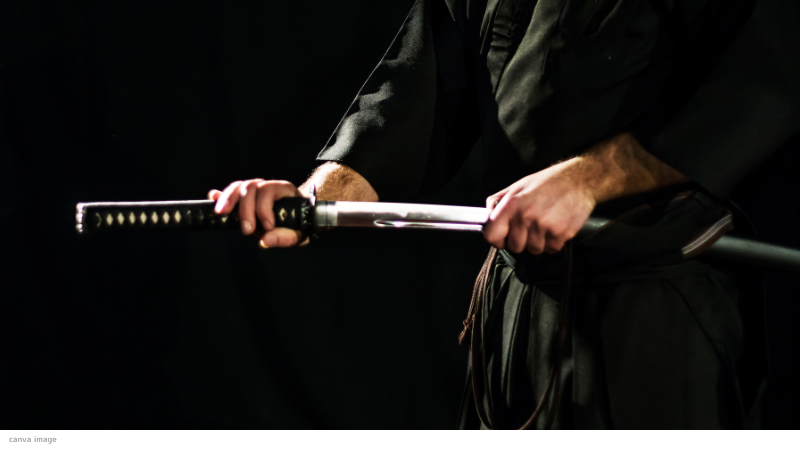
The origin of Busido
“Bushido” is a book written in English for Americans by Nitobe Inazo. It consists of below four main sections.
- The Origin and Source of Bushido
- Characteristics of Bushido
- The influence of Bushido upon the people
- The Future of Bushido
Nitobe had systematized “Bushido” as a culture that had somehow existed in Japan. Then, why did Nitobe write and publish “Bushido”?
It seems it was triggered by a conversation with a Belgian scholar. “There is no religious education in Japan, so how do you cultivate moral sense?” , the scholar asked. Nitobe had a hard time answering the question. Then, he decided to published a book to let people know about “Bushido.”
In fact, Bushido was very closely related to Japanese moral beliefs.
What is the Samurai?
What is the Samurai in the first place?
“Samurai” is a group whose occupation is fighting. And the common concept cultivated in this group is Bushido. This common concept includes duties and rules that the warriors perform in their daily lives.
In the Edo period, samurai belonged to the ruling class among Japanese people.
There was a hierarchy called Shi-no-ko-sho (士農工商), and it was a class that ruled people until the equality of all people was achieved by the Meiji Restoration.
They were earning money without working. Because of their high status, there was a system to collect money even without working.
But noble comes with duty. Samurai were required to have a very high moral sense. Because of their high status, they were bound by more strict obligations and ethics than ordinary men.
スポンサーリンク
The Samurai Mind (Bushido)
The thought of Bushido of Sumurai spread to ordinary citizens. It is common for the thought of the ruling class to permeate the people of the general class. Bushido is now reflected in the attitudes and thoughts that everyone takes on a daily basis.
Chugi (忠義)
The most characteristic part of Bushido is probably loyalty. For those who have Bushido, loyalty is above affection and filial piety. Samurai value loyalty above all else. They had the determination (loyalty) to die for their country.
Another purpose; Honour (名誉)
It is very hard to remain faithful and obedient for one’s country or lord. Because they are only one human, no matter how good they are, their motivation for the nation will break down. That’s why Bushido has another purpose: honor.
Even though there were virtues for loyalty, samurai aimed to earn their honor. Although they were paying dues to a lord and a country, they had their own motivation at the root.
Honne and Tatemae (本音と建前)
Its public face is loyalty but its private ones are desiring honor.
This is not a bad thing at all. By practicing loyalty, they gain honor. It was a good system for the nation and the lord, and for the samurai.
Kokki (克己)
One of the characteristics of Bushido is self-restraint. The great thing about Bushido is that people get their emotion in check, and care for others, even if it’s against their feelings.
The Japanese mentality of self-control is very good, but I think it goes a little too far. Why has it grown so stoic? There’s logic there. The Japanese have courage and courtesy as the virtues of Bushido.
These two strengthened the culture of modesty.
Stoic self-sufficiency vs. kindness
In detail, the “spirit of compassion,” which does not involve the other person, and the “culture of shame,” in which the virtue is to kill one’s emotion, have combined to create excessive humility and self-control.
However, the Japanese culture is wonderful because people can always think and act on their own, not on their own. This culture would not have taken root without the original Japanese character. Japanese have always had the ability to care for others.
スポンサーリンク
Summary
The basis of Bushido is “each and every one of us serves the world and the people.”.It is not easy to serve a cause even at the expense of oneself.
It takes great commitment and strong will. The samurai embodied this, and Bushido was the way of life in writing.

コメント
こんにちは、これはコメントです。
コメントの承認、編集、削除を始めるにはダッシュボードの「コメント」画面にアクセスしてください。
コメントのアバターは「Gravatar」から取得されます。